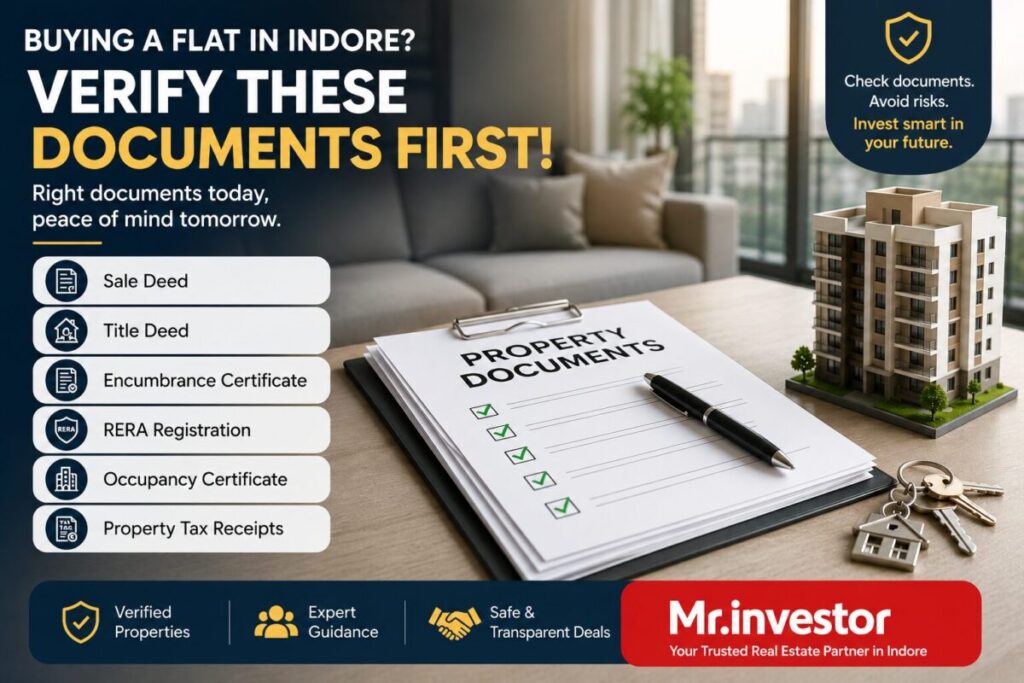
Buying a flat is one of the biggest financial decisions you’ll ever make. While most buyers focus on location, amenities, and price, one mistake can turn a dream home into a legal headache—not verifying the property’s legal documents.
Whether you’re purchasing your first apartment, upgrading to a larger home, or investing in real estate, checking the right paperwork is essential. A property that looks perfect may still have ownership disputes, unpaid loans, unauthorized construction, or missing approvals.
This is why experienced real estate professionals always recommend verifying every document before making any payment.
If you’re planning to buy a flat in Indore, this guide will help you understand the property documents required to buy a flat in Indore, why each document matters, and how you can protect yourself from costly mistakes.
- Why Property Verification Is Important Before Buying a Flat
- Property Document Verification: A Simple Checklist
- 1. Sale Deed – The Most Important Property Document
- 2. Title Deed – Verify Who Actually Owns the Property
- 3. Encumbrance Certificate – Check for Loans or Legal Claims
- 4. RERA Registration Certificate
- 5. Approved Building Plan
- Expert Tip from Mr.Investors
- 6. Occupancy Certificate (OC)
- 7. Completion Certificate (CC)
- 8. Property Tax Receipts
- 9. Identity Proof of the Seller
- 10. No Objection Certificates (NOCs)
- Common Mistakes Buyers Make While Verifying Property Documents
- Expert Tips for Safe Property Verification
- Property Buying Checklist
- Conclusion
- Frequently Asked Questions
Why Property Verification Is Important Before Buying a Flat
Many property disputes happen because buyers rely only on the builder’s promises or verbal assurances. Once the sale is completed, correcting legal issues can be expensive, time-consuming, and emotionally stressful.
Proper document verification helps you:
- Confirm the seller is the legal owner.
- Ensure the property has no legal disputes.
- Verify government approvals.
- Check whether the property is free from loans or mortgages.
- Avoid fraud and forged documents.
- Complete home loan approval smoothly.
- Protect your investment for the future.
Spending a little time reviewing documents today can save years of legal complications later.
Property Document Verification: A Simple Checklist
Before booking any flat, make sure the following documents are available and verified.
| Document | Why It Matters |
|---|---|
| Sale Deed | Confirms legal ownership |
| Title Deed | Verifies ownership history |
| Encumbrance Certificate | Shows whether the property has loans or legal liabilities |
| RERA Registration | Confirms the project is registered (where applicable) |
| Approved Building Plan | Ensures construction follows approved plans |
| Occupancy Certificate | Confirms the building is fit for occupation |
| Completion Certificate | Shows construction has been completed according to approved plans |
| Property Tax Receipts | Confirms taxes have been paid |
| Khata/Property Records (where applicable) | Verifies municipal records |
| Identity Proof of Seller | Confirms the seller’s identity |
Let’s understand each document in detail.
1. Sale Deed – The Most Important Property Document
The Sale Deed is one of the most important legal documents in any property transaction. It officially transfers ownership from the seller to the buyer after registration.
Without a properly executed and registered Sale Deed, proving legal ownership can become difficult.
Before signing the Sale Deed, verify that it includes:
- Correct names of buyer and seller
- Accurate property description
- Agreed purchase price
- Registration details
- Signatures of all parties
- Witness details
Always ensure the Sale Deed is registered with the appropriate government authority.
2. Title Deed – Verify Who Actually Owns the Property
Many buyers assume that every seller has clear ownership. Unfortunately, that isn’t always true.
The Title Deed establishes who legally owns the property and whether they have the right to sell it.
While reviewing the Title Deed, check for:
- Clear ownership history
- No ownership disputes
- No inheritance conflicts
- Proper transfer of ownership through previous transactions
If there are multiple owners, ensure that all required owners have given consent before proceeding.
3. Encumbrance Certificate – Check for Loans or Legal Claims
One of the most overlooked documents is the Encumbrance Certificate (EC).
This document helps you determine whether the property has any existing financial or legal liabilities, such as:
- Outstanding home loans
- Mortgages
- Court attachments
- Legal claims
- Previous registered transactions
Purchasing a property with unresolved liabilities can create significant financial and legal challenges.
Always request the latest Encumbrance Certificate before finalizing your purchase.
4. RERA Registration Certificate
If you’re purchasing an under-construction apartment, checking the RERA registration is essential.
Projects registered under the Real Estate (Regulation and Development) Act are required to meet specific legal and regulatory standards.
Before booking your flat, verify:
- RERA registration number
- Builder details
- Project completion timeline
- Approved layout
- Construction status
This simple step helps buyers make informed decisions and adds transparency to the buying process.
5. Approved Building Plan
Never assume that every constructed building has received proper approval.
The Approved Building Plan confirms that the construction complies with the plans sanctioned by the local authority.
Compare the approved plan with the actual property to ensure there are no major unauthorized changes or illegal extensions.
Unauthorized construction can create complications during resale, registration, or home loan processing.
Expert Tip from Mr.Investors
One of the most common mistakes buyers make is verifying documents only after paying a booking amount. At Mr.Investors, we recommend checking all major legal documents before making any financial commitment. A careful verification process can help you avoid disputes and give you greater confidence in your purchase.
6. Occupancy Certificate (OC)
An Occupancy Certificate (OC) is issued by the local municipal authority after confirming that the building has been constructed according to the approved plan and is safe for occupation.
If you’re purchasing a ready-to-move flat, always ask for the Occupancy Certificate. Living in a property without an OC may lead to issues with utility connections, resale, or legal compliance.
Before buying, verify that:
- The Occupancy Certificate has been issued by the competent authority.
- The flat number and project details match the property you’re purchasing.
- The certificate is genuine and complete.
7. Completion Certificate (CC)
Many buyers confuse the Completion Certificate with the Occupancy Certificate, but both serve different purposes.
A Completion Certificate confirms that the construction has been completed according to the approved building plan and applicable regulations. It is issued after the authorities inspect the completed project.
Checking this document helps ensure that the building has been legally completed and complies with construction norms.
8. Property Tax Receipts
Property tax receipts may seem like a minor document, but they reveal whether the previous owner has paid all municipal taxes.
Ask for the latest property tax receipts and confirm:
- There are no pending tax dues.
- The owner’s name matches the property records.
- The property details are accurate.
Outstanding property taxes can become the responsibility of the new owner if they are not identified before purchase.
9. Identity Proof of the Seller
Always verify the identity of the person selling the property.
Request valid identity documents such as:
- Aadhaar Card
- PAN Card
- Passport
- Voter ID
Compare these documents with the details mentioned in the Sale Deed and Title Deed. If someone is selling the property through a Power of Attorney (PoA), verify that the PoA is legally valid and properly registered where required.
10. No Objection Certificates (NOCs)
Depending on the project and location, you may also need to verify certain No Objection Certificates (NOCs).
These can include approvals from:
- Fire Department
- Environmental Authority
- Water Supply Department
- Electricity Department
- Airport Authority (where applicable)
For apartments developed by reputed builders, these approvals are generally obtained during the project approval stage. However, asking for confirmation provides additional peace of mind.
Common Mistakes Buyers Make While Verifying Property Documents
Many property disputes arise because buyers overlook important legal checks. Avoid these common mistakes:
Paying a Booking Amount Too Early
Never pay a substantial booking amount without reviewing the key legal documents. Marketing brochures and verbal promises should never replace proper verification.
Ignoring the Title History
Some buyers only check the current owner’s name without reviewing the property’s ownership history. An incomplete title chain may indicate unresolved disputes.
Not Checking RERA Registration
If you’re purchasing an under-construction apartment, failing to verify RERA registration can expose you to unnecessary risks.
Depending Only on Verbal Assurances
Always request written documents. Verbal commitments regarding approvals, possession dates, or amenities have little value if they are not documented.
Skipping Professional Assistance
Legal paperwork can be complex. Consulting an experienced real estate professional or legal expert can help identify issues that may not be obvious to first-time buyers.
Expert Tips for Safe Property Verification
Buying a home is not just about selecting the right location—it is also about making a legally secure investment.
Here are some expert recommendations:
- Verify every original document before making any payment.
- Cross-check property details with government records whenever possible.
- Visit the property personally instead of relying only on online listings.
- Confirm that the seller has the legal authority to sell the property.
- Review all payment terms carefully before signing any agreement.
- Keep copies of every document related to the transaction.
At Mr.Investors, we believe that informed buyers make confident decisions. That’s why our team guides clients through every stage of the property-buying process, including document verification, project evaluation, and selecting verified properties in Indore.
Property Buying Checklist
Before purchasing a flat in Indore, make sure you’ve completed the following checklist:
✅ Verified the Sale Deed
✅ Checked the Title Deed
✅ Obtained the latest Encumbrance Certificate
✅ Verified the RERA registration (if applicable)
✅ Reviewed the Approved Building Plan
✅ Collected the Occupancy Certificate
✅ Verified the Completion Certificate
✅ Checked recent Property Tax Receipts
✅ Verified the seller’s identity
✅ Confirmed all required NOCs
Completing this checklist can significantly reduce the risk of legal complications in the future.
Conclusion
Purchasing a flat is a significant milestone, and verifying the right documents is one of the most important steps in protecting your investment. Taking the time to review ownership records, legal approvals, tax receipts, and project certifications can help you avoid disputes and make an informed decision.
Whether you’re buying your first home or expanding your investment portfolio, professional guidance can make the process smoother and more secure. Mr.Investors, a trusted real estate consultancy in Indore, assists buyers in identifying verified properties and understanding the legal aspects of property transactions, helping them purchase with greater confidence.
Frequently Asked Questions
What documents are required to buy a flat in Indore?
The essential documents include the Sale Deed, Title Deed, Encumbrance Certificate, RERA Registration (if applicable), Approved Building Plan, Occupancy Certificate, Completion Certificate, Property Tax Receipts, seller identity proof, and relevant No Objection Certificates.
How can I verify property documents before buying a flat?
You should carefully review the original documents, verify ownership history, check government approvals, confirm there are no outstanding legal or financial liabilities, and seek professional guidance if needed.
Is RERA registration mandatory for every property?
RERA registration generally applies to eligible real estate projects as specified under the Real Estate (Regulation and Development) Act. Always verify whether the project you’re considering falls under RERA and check its registration details.
What is the difference between a Sale Deed and a Title Deed?
A Sale Deed legally transfers ownership from the seller to the buyer, while a Title Deed establishes the ownership history and confirms the seller’s legal right to transfer the property.
Why is an Encumbrance Certificate important?
An Encumbrance Certificate helps confirm whether the property has any existing mortgages, loans, court attachments, or other registered legal liabilities.
Can I buy a flat without an Occupancy Certificate?
Purchasing a ready-to-move flat without an Occupancy Certificate is generally not advisable, as the certificate confirms that the building is legally fit for occupation.
How do I know if a property has legal disputes?
Reviewing the Title Deed, Encumbrance Certificate, court records where applicable, and consulting experienced real estate professionals or legal experts can help identify potential issues before purchase.
Should I hire a property consultant before buying a flat in Indore?
Working with an experienced real estate consultant can simplify the buying process by helping you verify documents, evaluate projects, understand local market conditions, and reduce the chances of costly mistakes.