
How to compare two properties before buying in Indore is one of the most common questions homebuyers ask before making a final decision. Choosing between two attractive properties can be challenging, but following a structured comparison process helps you make an informed investment.
Two Beautiful Homes. One Big Decision.
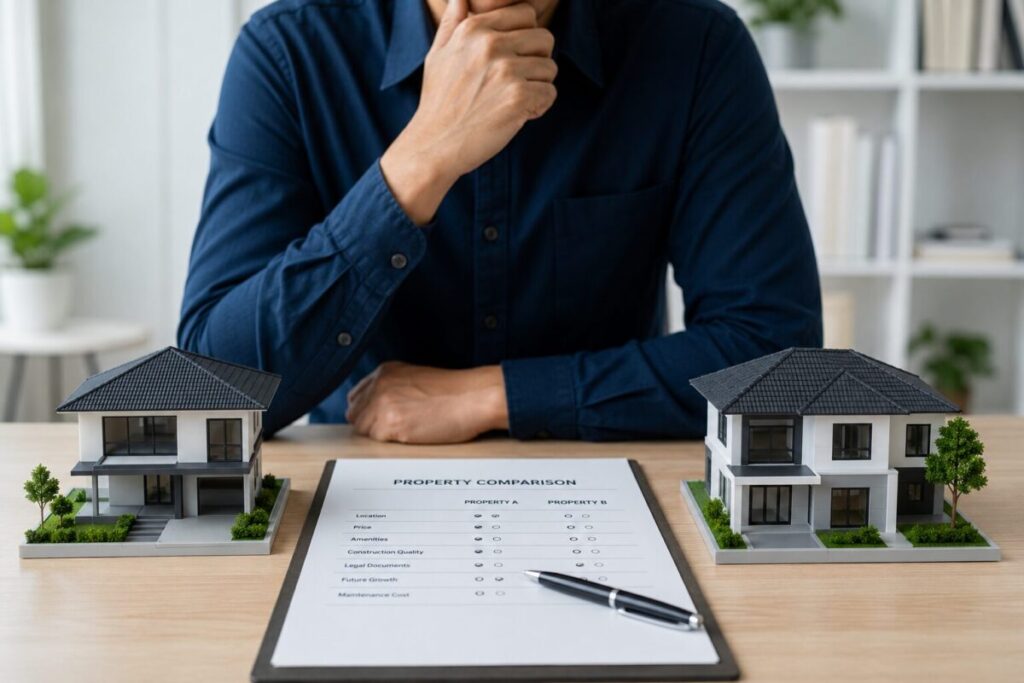
Imagine you’ve shortlisted two beautiful properties.
Both are within your budget.
Both are located in good neighbourhoods.
Both have modern amenities, attractive interiors, and promising locations.
Now comes the difficult question:
Which one should you buy?
This is where many homebuyers make an expensive mistake.
Instead of comparing every important factor, they often choose the property with the bigger balcony, lower price, or more attractive brochure.
Unfortunately, a property purchase is much more than choosing what looks better today.
The right decision should also consider your future lifestyle, daily convenience, resale value, legal security, and long-term investment potential.
If you’re planning to Buy Property in Indore, this guide will help you compare two properties like an experienced buyer so you can make a confident and informed decision.
- Why Comparing Properties Is So Important
- Step 1: Compare the Location, Not Just the Property
- Step 2: Compare the Total Cost—Not Just the Price
- Step 3: Evaluate Construction Quality
- Step 4: Compare the Builder's Reputation
- Step 5: Think About Your Future Lifestyle
- Why Professional Comparison Makes a Difference
- Step 6: Compare the Amenities That You'll Actually Use
- Step 7: Evaluate Connectivity and Everyday Convenience
- Step 8: Don't Ignore Future Growth Potential
- Step 9: Compare Maintenance Costs
- Step 10: Understand the Legal Aspects
- Common Mistakes Buyers Make While Comparing Properties
- Expert Tips to Compare Properties Like a Professional
- Property Comparison Checklist
Why Comparing Properties Is So Important
Buying a property is one of the biggest financial commitments most people make in their lifetime.
Even a small difference in location, construction quality, or future development can significantly affect your living experience and your property’s value over the next 10–20 years.
Many buyers compare only:
- Price
- Carpet area
- Amenities
While these are important, they are only part of the complete picture.
Professional property evaluation also includes factors such as:
- Future infrastructure
- Connectivity
- Builder reputation
- Legal documentation
- Construction quality
- Maintenance costs
- Resale demand
- Lifestyle suitability
Looking at every factor together helps you make a balanced decision rather than an emotional one.
Step 1: Compare the Location, Not Just the Property
Real estate experts often say,
“You can renovate a house, but you cannot change its location.”
Location influences almost every aspect of your property’s future value.
When comparing two properties, evaluate:
- Distance from your workplace
- Schools and colleges
- Hospitals
- Public transport
- Shopping centres
- Daily convenience
- Traffic conditions
- Safety of the neighbourhood
Also consider upcoming developments.
New roads, metro projects, commercial hubs, and public infrastructure can increase demand in a particular area over time.
For buyers looking at Property in Indore, understanding neighbourhood growth is just as important as comparing the property itself.
Step 2: Compare the Total Cost—Not Just the Price
One property may appear less expensive initially but could cost significantly more after including additional charges.
Always compare the complete cost of ownership.
This includes:
- Base property price
- Registration charges
- Stamp duty
- GST (where applicable)
- Parking charges
- Clubhouse membership
- Maintenance deposits
- Legal charges
- Interior expenses
- Moving costs
Calculating the total investment helps you compare both properties more accurately and prevents unexpected financial surprises later.
Step 3: Evaluate Construction Quality
Beautiful interiors can create a strong first impression.
However, long-term satisfaction depends on construction quality rather than decorative finishes.
During your property visit, observe:
- Wall finishing
- Flooring quality
- Doors and windows
- Plumbing
- Electrical fittings
- Ventilation
- Natural lighting
- Water drainage
- Common area maintenance
Even small details can reveal how carefully the project has been developed.
Taking time to inspect construction quality today can reduce maintenance problems in the future.
Step 4: Compare the Builder’s Reputation
The builder plays a significant role in your property’s quality, timely possession, and long-term value.
Before making your decision, research:
- Previous completed projects
- Construction quality
- Customer feedback
- Delivery timelines
- Market reputation
- Project approvals
Reliable builders generally maintain better quality standards and stronger buyer confidence.
Step 5: Think About Your Future Lifestyle
Many buyers purchase a property based only on their current needs.
Instead, ask yourself:
Will this property still meet my family’s needs five or ten years from now?
Consider factors such as:
- Future family size
- Work-from-home requirements
- Children’s education
- Parking needs
- Elder-friendly accessibility
- Nearby healthcare facilities
- Open spaces and parks
Buying a home that supports your future lifestyle often proves more valuable than choosing one based only on today’s requirements.
Why Professional Comparison Makes a Difference
Comparing two properties isn’t always straightforward.
Both may appear equally attractive on paper, yet one could offer significantly better long-term value.
This is where experienced guidance becomes valuable.
At Mr.Investors, buyers are encouraged to compare properties based on practical factors rather than marketing brochures alone.
Instead of focusing only on pricing, our consultation process helps buyers evaluate location advantages, construction quality, future development, legal considerations, and overall suitability based on their individual goals.
The result is a more informed buying decision that aligns with both present needs and future aspirations.
Step 6: Compare the Amenities That You’ll Actually Use
Modern residential projects often promote a long list of amenities to attract buyers. While these facilities add value, it’s important to focus on the ones that genuinely improve your daily lifestyle rather than simply increasing the property’s appeal.
Instead of asking, “Which property has more amenities?”, ask yourself:
“Which amenities will my family actually use?”
Some of the most practical amenities include:
- Children’s play area
- Landscaped gardens
- Walking and jogging tracks
- Clubhouse
- Gymnasium
- Swimming pool
- 24×7 security
- CCTV surveillance
- Visitor parking
- Power backup
Choosing amenities that match your lifestyle helps you receive better value for your investment.
Step 7: Evaluate Connectivity and Everyday Convenience
A beautiful home can become inconvenient if daily travel consumes too much of your time.
Before making a final decision, evaluate how well both properties are connected to important destinations.
Ask yourself:
- How far is your workplace?
- Are schools and colleges nearby?
- Is there easy access to hospitals?
- Are supermarkets and pharmacies within reach?
- Is public transportation easily available?
- How much traffic does the area experience during peak hours?
Convenience is something you’ll experience every day. Even a small difference in travel time can significantly improve your quality of life over the years.
Step 8: Don’t Ignore Future Growth Potential
Many buyers purchase a property based only on its current surroundings.
Smart buyers also evaluate what the area could look like five or ten years from now.
Future development often influences:
- Property appreciation
- Rental demand
- Lifestyle
- Infrastructure
- Business opportunities
Look for factors such as:
- Upcoming highways
- Metro connectivity
- IT parks
- Commercial developments
- Educational institutions
- Healthcare projects
- Government infrastructure plans
Properties located in growing areas often offer stronger long-term investment potential.
Step 9: Compare Maintenance Costs
The purchase price isn’t the only expense you’ll have as a homeowner.
Every residential project has ongoing maintenance costs that should be considered before making a decision.
These may include:
- Monthly maintenance charges
- Clubhouse maintenance
- Security charges
- Lift maintenance
- Garden maintenance
- Power backup expenses
A property with lower maintenance costs may offer better long-term affordability without compromising your lifestyle.
Step 10: Understand the Legal Aspects
Legal verification is one of the most important parts of buying property, yet it’s often overlooked.
Before making any financial commitment, ensure you understand key aspects such as:
- Ownership details
- Sale agreement
- Project approvals
- Approved building plans
- RERA registration (where applicable)
Reviewing these documents carefully helps buyers make informed decisions and reduces the chances of future legal complications.
Common Mistakes Buyers Make While Comparing Properties
Many buyers unknowingly compare only the visible aspects of a property.
Some of the most common mistakes include:
Choosing the Lowest Price
A lower price doesn’t automatically make a property a better investment.
Always compare the complete value offered by both properties rather than focusing only on cost.
Ignoring Future Development
A slightly more expensive property located in a rapidly developing area may offer stronger appreciation over time.
Comparing Only Amenities
Swimming pools and clubhouses are attractive, but location, connectivity, construction quality, and future demand often have a greater impact on long-term satisfaction.
Skipping Multiple Site Visits
Visiting a property only once may not provide the complete picture.
If possible, visit during different times of the day to understand traffic conditions, noise levels, and neighbourhood activity.
Making an Emotional Decision
Buying a home is an emotional milestone, but it should also be a practical financial decision.
Always compare facts before making your final choice.
Expert Tips to Compare Properties Like a Professional
Experienced buyers usually follow a structured approach before making a decision.
Here are a few practical tips:
✔ Prepare a comparison checklist before every site visit.
✔ Rate each property based on location, budget, construction quality, and amenities.
✔ Calculate the total investment instead of comparing only the base price.
✔ Visit both properties more than once.
✔ Consider your future lifestyle requirements.
✔ Evaluate long-term appreciation potential.
✔ Take enough time before making your final decision.
Property Comparison Checklist
Use this checklist while comparing two properties.
✔ Better location
✔ Better connectivity
✔ Higher construction quality
✔ Better ventilation and natural lighting
✔ Future infrastructure development
✔ Practical amenities
✔ Transparent documentation
✔ Reasonable maintenance costs
✔ Suitable for your long-term goals
✔ Overall value for money
At Mr.Investors, we encourage every buyer to compare properties using practical evaluation criteria instead of relying solely on advertisements or attractive brochures. Taking a structured approach helps buyers identify the property that offers the best balance of lifestyle, convenience, and long-term value. By carefully evaluating every important factor before making a decision, buyers can invest with greater confidence and peace of mind.